GBCORP BLOG · TOPIC
AI
73 articles on AI from the GBCORP Blog — grouped by year, newest first.
2026 · 27 posts
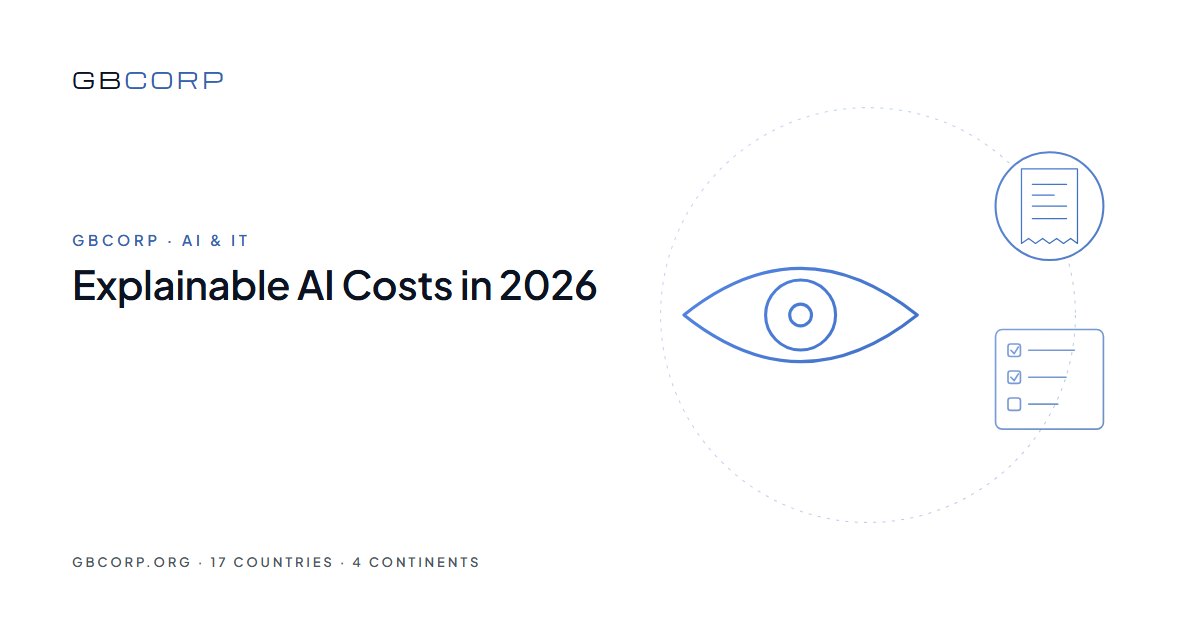 AIExplainable AI Costs in 2026: Assessment, Programme and Audit TrailSeptember 16, 2026
 AIEdge AI Costs in 2026: Pilot Budgets, Hardware and When Edge WinsAugust 26, 2026
 AIHyperautomation Costs in 2026: Price per Workflow, Licences and ROIAugust 12, 2026
 AIFrom Pilot to Programme: An Enterprise AI RoadmapJuly 20, 2026
 AIThe Hyperautomation Roadmap 2026: Where SMEs StartJuly 14, 2026
 AIExplainable AI in 2026: The EU AI Act Compliance EraJuly 13, 2026
 AIEdge AI in 2026: The Year On-Device Intelligence Became the DefaultJuly 10, 2026
 AIVoice AI Agents in 2026: Build vs Buy, Latency and CostJuly 8, 2026AIBuying Generative AI Services in 2026: Landing in the ROI 5%July 6, 2026
 AICybersecurity Services in 2026: What to Buy FirstJuly 3, 2026
 AICloud in 2026: Costs, Security Realities and How to Choose a PartnerJuly 1, 2026
 AICommon Cloud Computing Myths DebunkedJune 29, 2026
 AIHumanoid Robot Prices and ROI in 2026: $6K to EnterpriseJune 17, 2026AISovereign AI: Keeping Data and Models Inside Your BordersJune 11, 2026
 AIWhy Cloud Solutions Are Essential for Business GrowthJune 9, 2026
 AIThe Future of AI Humanoid Robots in Everyday LifeMay 30, 2026AIAI Governance: Build the Framework Before You Need ItMay 14, 2026
 AITop Generative AI Trends to Watch in 2026May 12, 2026
 AIWhat Is Voice AI? A Complete Beginner’s GuideApril 20, 2026AIDigital Twins: Testing Reality in Simulation FirstApril 9, 2026
 AIKey Differences Between Industrial Robots and Humanoid RobotsMarch 31, 2026AIThe AI Behind Smart Cities: Sensors, Models and ServicesMarch 12, 2026
 AIThe Rise of Multimodal AI: Connecting Text, Video, and VisionMarch 2, 2026AIConversational AI for Citizen and Customer ServicesFebruary 12, 2026
 AIHow the GBCORP AI Humanoid Robot Is Shaping the Future of Smart AutomationFebruary 11, 2026
 AICommon Myths About Artificial IntelligenceJanuary 25, 2026AIPredictive Analytics: Seeing Problems Before They Cost YouJanuary 15, 2026
2025 · 22 posts
 AIAI and Connectivity in Modern Electric VehiclesDecember 30, 2025AIComputer Vision at Work: Safety, Quality and SecurityDecember 18, 2025AIHyperautomation: What Happens When You Automate the AutomationDecember 11, 2025AIExplainable AI: Why 'Because the AI Said So' Fails in BusinessNovember 27, 2025AIIntelligent Document Processing: Paperwork Into Structured DataNovember 20, 2025AIEdge AI: Intelligence That Doesn't Phone HomeNovember 13, 2025
 AIAI and IoT in City Infrastructure: Smarter, Faster, SaferNovember 10, 2025AIVoice AI: The Receptionist Who Never SleepsOctober 23, 2025
 AIThe Role of Artificial Intelligence in Electric Vehicle PerformanceOctober 20, 2025AIAI in Government: How the Public Sector Actually Deploys ItOctober 16, 2025AIGenerative AI for Business: What Survives Beyond the HypeOctober 9, 2025
 AICan Artificial Intelligence Help Achieve Net Zero by 2050?September 20, 2025
 AISmart Cities of the Future: AI for Energy Efficiency and Zero EmissionsAugust 31, 2025AIThe SME Cybersecurity Blind Spot: Why Small Firms Get HitAugust 28, 2025AICloud Migration for SMEs: The Plain-English GuideAugust 14, 2025
 AIGBCORP.AI: Redefining the Future of Intelligent Enterprises with AI-Driven Business SolutionsJuly 30, 2025
 AIMultilingual Voice AI: Breaking Language Barriers in Global Customer SupportJuly 15, 2025
 AIAI-Powered Hyperautomation vs Traditional Automation: What’s the Difference?June 30, 2025
 AIWhat Is Explainable AI and Why Does It Matter?June 15, 2025
 AITop 5 Benefits of Using Edge AI in Remote Healthcare and TelemedicineMay 15, 2025AIWhat a Humanoid Robot Actually Does for Your BusinessMay 8, 2025
 AITop Ways Businesses Are Using Generative AI to Stay Ahead in 2025April 30, 2025
2024 · 6 posts
 AICustom AI Development: The Build, Week by WeekNovember 24, 2024
 AICompany That Can Build an AI-Powered App: GBCORP's AnswerSeptember 24, 2024
 AICustom AI Solutions: When Off-the-Shelf AI Stops FittingAugust 10, 2024
 AIAI Platform Development: One Layer Under Every AI StepJuly 31, 2024
 AIAI Chatbot Development: An Assistant That Answers From Your ContentMarch 10, 2024
 AIAI Consulting Company: What GBCORP Advises and What It RefusesMarch 2, 2024
2023 · 9 posts
 AIAI Consulting Services: A Scoping Week Instead of a Strategy DeckDecember 26, 2023
 AIAI App Development: An Ordinary App With One Extraordinary StepDecember 18, 2023
 AIAI Development Services: What Is in the Price and What Is NotDecember 13, 2023
 AIAI Development Company: What GBCORP Builds and How It Measures ItOctober 21, 2023
 AIAI Integration Services: Adding a Model to the Software You RunAugust 24, 2023
 AIAI Agent Development: Tools, Limits and a Review ScreenJune 15, 2023
 AIMachine Learning Development: From Data to a Working ModelJune 2, 2023
 AIIntelligent Automation: Where AI Meets the WorkflowApril 4, 2023
 AIAI Agents Company: Software That Takes the Next Step ItselfMarch 5, 2023
2022 · 8 posts
 AIAI SaaS Development: Building a Product Around a ModelDecember 4, 2022
 AIAn AI and Software Development Company: GBCORP's Plain AnswerNovember 9, 2022
 AICompany for AI App Development: Choosing a Builder That ShipsOctober 5, 2022
 AIChoosing an AI Chatbot Company: Grounded Answers or Confident NonsenseJune 25, 2022
 AIEnterprise AI Solutions: Governance First, Then the Clever PartJune 19, 2022
 AIWhat an AI Automation Company Should Do in Ninety DaysApril 30, 2022
 AIAI Application Development: Build the App Around the ModelMarch 9, 2022
 AIGenerative AI Solutions: Where They Pay and Where They PretendJanuary 28, 2022