
GBCORP BLOG · SUSTAINABILITY
Solar Fence Guide 2026: Bifacial Yield, Costs and Siting
Solar fencing graduated from novelty to catalogue product, with European installers reporting eight-year amortization and module warranties three times that long. Here is the 2026 buyer's math.
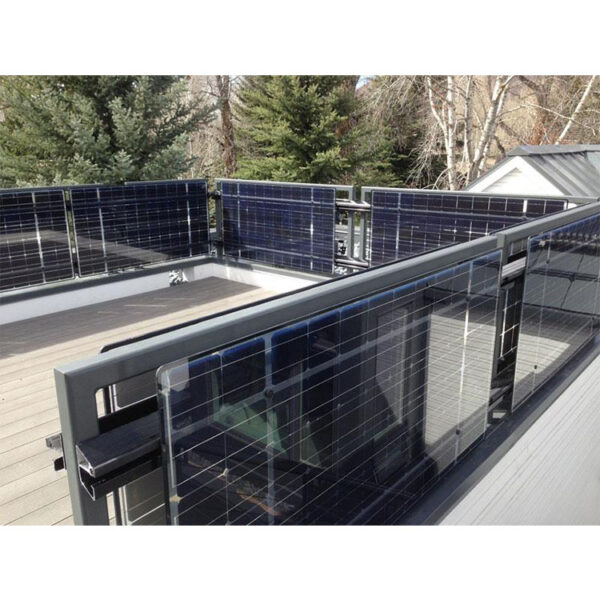
The solar fence market matured fast because the value story is checkable: fencing budgets are known, feed-in and self-consumption values are known, and bifacial yield curves are published. Here is what the 2026 buyer needs.
Yield: the east–west double peak
An east–west bifacial fence produces a two-humped day: a strong morning peak, a midday valley, a strong afternoon peak. Annual yield typically lands at 70–90 % of an optimally tilted array per installed watt — but its timing matches consumption better, so self-consumption rates run higher and the economic yield gap narrows further. In snowy or dusty regions vertical panels lose almost nothing to soiling; installers report performance advantages precisely where tilted arrays suffer.
Cost against the fence you were buying
| Item | Typical 2026 band (per linear metre, ~2 m high) |
|---|---|
| Quality conventional fencing (installed) | ≈ €80 – €250 |
| Bifacial solar fence (installed) | ≈ €250 – €450 |
| Effective solar premium | ≈ €100 – €300 / m — the only part payback must cover |
With ~0.4 kW per metre installed and European irradiation, that premium commonly amortizes in 7–9 years; module warranties run 25–30. Everything after amortization is a fence being paid to stand there.
Siting rules that decide success
Run the fence north–south so faces look east–west — the orientation is the yield curve. Respect row distance from walls and hedges: morning/evening sun arrives at low angles; nearby obstacles cost disproportionate energy. Mind reflection neighbours: the rear face harvests albedo — light ground surfaces (gravel, dry grass) boost it measurably. Wind load is the structural driver: posts and embedment should be engineered to fencing codes with PV-area wind figures, not guessed.
Questions for any supplier
Ask for the yield curve (not just kWp), the wind-load engineering, the warranty split between module and structure, and whether wall-mounted vertical variants share the same electrical design — useful where a boundary is masonry, not open ground.
Full specifications and vertical wall-mount options: GBCORP Double Bifacial Solar Panel Fence. New to the concept? Start with Solar Fences: Power and Privacy from the Same Vertical Metre, then compare the whole vertical family at the GBCORP Sustainability e-shop.










