GBCORP BLOG · SUSTAINABILITY
Colored BIPV Solar Tiles in 2026: Shades, Output and Specification
Colored photovoltaic cladding has matured from exhibition pieces to tendered building product. This guide gives specifiers the 2026 numbers: what each shade costs in output, what to certify, and what to write into the glass schedule.
In 2026 the colored-BIPV conversation has moved from "is it possible?" to "which shade, and what does it cost me in yield?" Here are the working answers.
The shade-versus-output table
| Shade family | Typical output retained | Visual character |
|---|---|---|
| Anthracite / slate grey | 90 – 95 % | Closest to classic panels, reads as stone |
| Bronze / brown | 85 – 90 % | Warm metallic, pairs with masonry |
| Terracotta / brick red | 80 – 88 % | Heritage districts, roofscapes |
| Green / blue | 78 – 85 % | Statement façades, campuses |
| Light grey / off-white | 70 – 80 % | The hardest shade — verify samples in daylight |
Read the retained-output column against the alternative, which is cladding that produces nothing. Even the "worst" shade converts an idle wall into a generator at four-fifths strength.
Specification checklist
Dual certification — IEC 61215 / 61730 as photovoltaics plus the cladding standards of your jurisdiction. Color stability — demand accelerated-weathering data; interference color should not fade like paint. Sample approval in daylight — coated colors shift with viewing angle; approve a physical sample on site, at height, at noon and at dusk. Electrical engineering included — string design across elevations belongs with the tile supplier. Custom sizing — façade grids are never uniform; catalogue-only suppliers create waste and visual patchwork.
Cost logic in 2026
Colored BIPV carries a premium of roughly 10–20 % over standard BIPV glass for the coating step. Against premium architectural cladding — which the tiles replace one-for-one — the effective delta is far smaller, and the tiles are the only cladding on the market with a payback column. Model it as: (cladding budget you already had) + (modest PV premium) − (25+ years of generation and cooling savings).
Write the tender line right
"Colored building-integrated photovoltaic cladding tiles, interference-coated (non-painted), shade to approved sample, dual-certified IEC 61215/61730 and applicable cladding codes, supplied with project-specific electrical layout." That sentence filters the market to serious manufacturers in one pass.
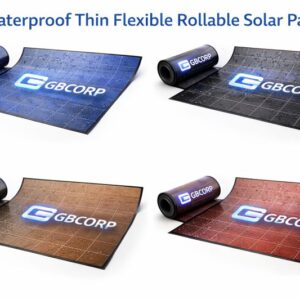
For shades, dimensions and datasheets, see the GBCORP BIPV Façade Color Solar Panel Tiles — and for the technology story behind colored PV, our earlier piece Colored Solar Façades: Architecture No Longer Has to Choose Black. Browse the complete GBCORP Sustainability e-shop for the rest of the BIPV family.