
GBCORP BLOG · SUSTAINABILITY
Transparent Solar Glass: How Windows Quietly Become Power Plants
Every square metre of glass on a modern building receives free energy all day long — and reflects almost all of it away. Transparent photovoltaic glass changes that equation: the window stays a window, and quietly becomes a generator.
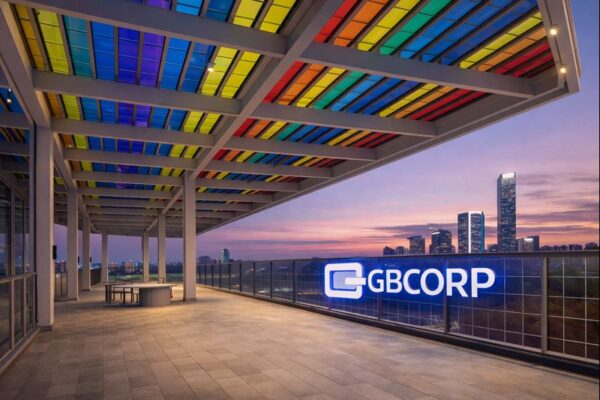
Architects have always faced a quiet trade-off: the more glass a building wears, the more daylight it enjoys — and the more solar energy it throws away. Conventional photovoltaic panels solved the energy half of the problem but were never welcome on a façade; nobody designs a glass tower and then bolts opaque blue rectangles onto it. Transparent solar glass ends that trade-off.
What transparent solar glass actually is
The panels are laminated architectural glass with an ultra-thin layer of cadmium telluride (CdTe) — a photovoltaic film measured in microns — deposited between the glass layers. The film absorbs part of the solar spectrum and converts it to electricity, while allowing a controlled share of visible light to pass through. That share, called visible light transmission (VLT), is chosen at manufacture: from a subtle tint that keeps views crystal clear to deeper shades that double as sun control.
To the eye, the result looks like premium tinted glazing. To the electrical room, it looks like a solar array that happens to be invisible.
Where it earns its keep
Curtain walls and façades. A tower's vertical skin is enormous compared to its roof. Even at the modest efficiency of see-through photovoltaics, activating hundreds or thousands of square metres of façade produces meaningful power — from surface area the building already owns. For deeper coverage, pairing transparent vision glass with opaque spandrel panels like the GBCORP BIPV Solar Panel Glass Façade lets the whole elevation work.
Skylights and atria. Overhead glazing receives the strongest, most direct sun of any glass in the building. Transparent solar glass converts that heat problem into a power source while softening glare below.
Balconies and railings. Residential towers carry kilometres of glass balustrade that do nothing all day. Photovoltaic railing glass generates power at the exact height where apartments consume it.
The comfort dividend nobody advertises
Because the photovoltaic film absorbs a large share of solar radiation, the glass behaves like high-grade solar-control glazing. Interiors behind it stay noticeably cooler, air-conditioning loads drop, and furnishings are protected — the film blocks almost all ultraviolet. In hot climates like the Gulf, the cooling saving alone can rival the value of the electricity generated. You are effectively buying one product and receiving two.
Common questions, honest answers
Does it look different from normal glass? It reads as elegantly tinted glazing. Visitors do not identify it as solar unless told.
How much power does it make? Less per square metre than a rooftop panel — and that is the wrong comparison. The right one: how much energy does your glass produce today? Zero. Transparent PV turns an idle surface into a generator without claiming any new space.
Does it need special maintenance? It is cleaned like glass, because it is glass. There are no moving parts, and thin-film chemistry is known for performing well in heat and diffuse light.
Is it safe? The construction is laminated safety glass — the same family specified for overhead and façade glazing worldwide — with the film sealed permanently between layers.
Where to start
The practical first step is a glass schedule: which elevations, how many square metres, and what VLT suits each orientation. From there, output and payback are straightforward to model. Explore the GBCORP Transparent CdTe Thin-Film Solar Glass Panel for specifications, or see how thin-film flexibility extends beyond windows in our guide to flexible rollable solar panels.
GBCORP delivers building-integrated photovoltaic solutions across 17 countries on 4 continents — engineered for architecture first, energy always.










