
GBCORP BLOG · AI
The Future of AI Humanoid Robots in Everyday Life
Technology is gradually becoming part of everyday routines, and humanoid robots are beginning to move from research labs into real-world environments. What once seemed futuristic is now becoming more practical for…
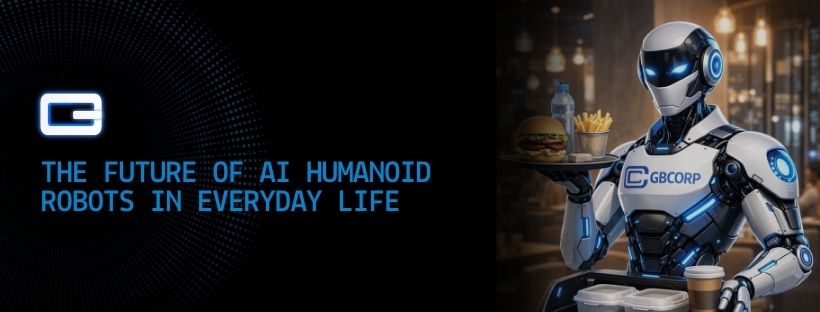
Technology is gradually becoming part of everyday routines, and humanoid robots are beginning to move from research labs into real-world environments. What once seemed futuristic is now becoming more practical for businesses, public spaces, and even homes. From assisting customers to supporting workplace operations, humanoid robots are expected to play a much larger role in the years ahead.
As robotics and intelligent automation continue to improve, the focus is shifting towards creating machines that can interact naturally with people and support daily activities in meaningful ways.
Humanoid Robots Are Becoming More Practical
Humanoid robots are designed to resemble human movement and interaction, allowing them to operate more naturally in environments built for people. Modern systems can communicate, respond to commands, recognise surroundings, and perform assistance-based tasks.
Businesses are already exploring their use in customer service, hospitality, healthcare, retail, education, and smart facilities. Instead of replacing people entirely, these robots are increasingly being developed to support teams, improve efficiency, and handle repetitive interactions.
Everyday Applications Are Expanding
One of the biggest changes happening in robotics is the move towards everyday usability. Humanoid robots are no longer limited to industrial settings. They are now being designed for environments where human interaction matters.
In hotels and reception areas, robots can assist visitors with directions and basic information. In healthcare settings, they may support patient interaction and monitoring. Educational institutions are also exploring robotics to create more engaging learning experiences.
As technology becomes more advanced, these systems are expected to handle more personalised interactions and adapt better to real-world situations.
Smarter Interaction and Mobility
Recent developments in robotics focus heavily on perception, mobility, and communication. New humanoid systems are being built with advanced sensors, autonomous movement, and interaction capabilities that allow them to respond more naturally to people and surroundings.
This progress is helping robots move beyond simple programmed responses. The goal is to create systems that can understand instructions, recognise environments, and interact more effectively in dynamic spaces.
The Role of AI Humanoid Robots in Business
Businesses are showing growing interest in humanoid robots because they can improve operational efficiency while creating modern customer experiences. Industries such as hospitality, retail, healthcare, airports, and smart buildings are already exploring practical applications.
Humanoid robots can assist with front-desk support, visitor guidance, customer interaction, information delivery, and automated service operations. They also help businesses showcase innovation and technology-driven environments.
GBCORP AI Humanoid Robot
GBCORP is actively contributing to this evolving space through its advanced humanoid robotics solutions. The GBCORP AI Humanoid Robot is designed as an intelligent service platform that combines interaction, mobility, and smart automation capabilities.
Built for modern business environments, the robot is designed to support customer engagement, smart assistance, and interactive communication across industries. Its human-like interaction model makes it suitable for public-facing environments where communication and user experience are important.
The Future Ahead
The future of humanoid robots will likely focus on making technology feel more helpful, accessible, and integrated into everyday life. As robotics continues to improve, these systems are expected to become more responsive, more mobile, and easier to use in real-world environments.
Rather than being seen as machines performing isolated tasks, humanoid robots are gradually becoming part of how businesses and public spaces operate.
Conclusion
AI humanoid robots are moving closer to everyday reality. With improvements in interaction, movement, and intelligent automation, they are becoming useful across a wide range of industries and environments.
As companies continue exploring smarter ways to improve operations and customer experiences, humanoid robotics will play an increasingly important role. Solutions like the GBCORP AI Humanoid Robot reflect how technology is evolving towards more practical and human-centred applications.
Priced and ready to buy
From the GBCORP e-shop, with every customised requirement quoted before work starts.










