
GBCORP BLOG · SUSTAINABILITY
Solar Balconies: Turning Kilometres of Tower Railings into Quiet Power
Walk past any residential tower and count the balconies. Every one carries a glass balustrade — structural, code-mandated, and idle. Photovoltaic balcony glass puts that mandatory surface to work.
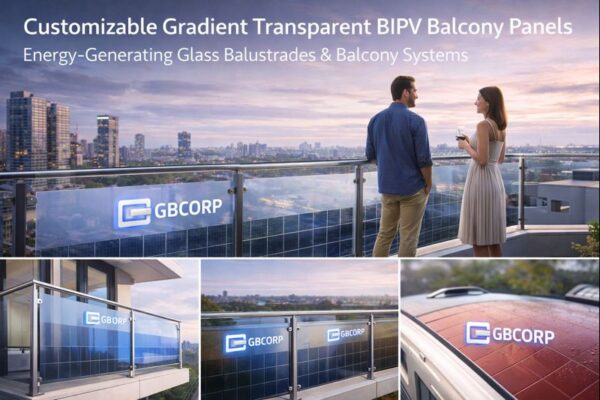
Balustrade glass is one of the few building surfaces that exists purely because regulation demands it. It must be laminated safety glass, it must be there, and it has never been asked to do anything but not break. Transparent BIPV balcony panels ask more of it.
Same railing, new job
Photovoltaic balustrade panels are laminated safety glass — the identical structural family already specified — with semi-transparent photovoltaic layers inside the laminate. They mount in standard balustrade channels and post systems, meet the same impact classifications, and connect through slim edge junctions concealed in the base profile. Nothing about the balcony's appearance, safety case or installation trade changes; the glass simply gains an output cable.
Why balconies are better solar sites than they look
They face outward, everywhere. A tower's balconies collectively face every orientation, smoothing production across the day.
They generate where power is consumed. The apartment behind the railing runs its air-conditioning metres from the panel — no transmission, no roof-to-basement cabling campaigns.
They scale absurdly. A single large residential tower can carry more balustrade area than its entire roof — and a masterplan of towers carries hectares of it.
Transparency where it matters
Residents keep their view: the panels are specified semi-transparent, with the tint doubling as privacy glazing from below — a feature balcony glass buyers already pay for. Developers can tune transparency per elevation, deeper on sun-hammered west faces, lighter where views sell apartments.
For developers and owners' associations
On new builds, photovoltaic balustrades ride the existing procurement line — the balustrade package — at a premium rather than as a separate solar project. On refurbishments, balustrade replacement cycles (common after 20–25 years) are the natural entry point. Either way, the electrical design should come from the panel supplier against your balcony schedule.
Specifications and customization options: GBCORP Customizable Transparent BIPV Balcony Panels — or browse the full GBCORP Sustainability e-shop. GBCORP supplies building-integrated photovoltaics across 17 countries on 4 continents.










