As organizations look for smarter ways to integrate renewable energy into everyday infrastructure, solar technology is expanding beyond rooftops and solar farms. One innovative solution gaining attention is solar panel fencing, a system that combines physical security with clean energy production.
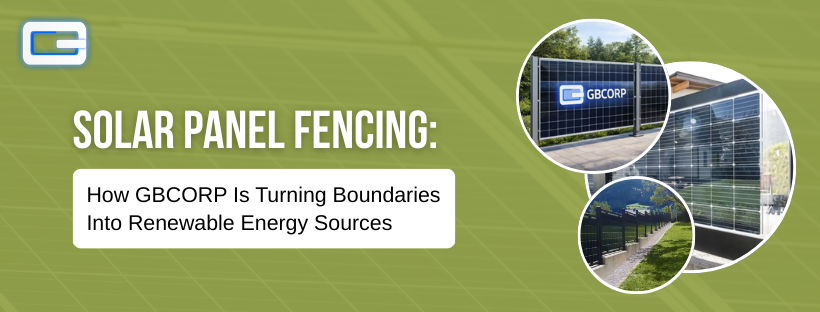
The Double Bifacial Monocrystalline Solar Panel Fence developed by GBCORP represents a modern approach to infrastructure design. Instead of installing traditional fences that serve only as boundaries, this system allows property owners to generate electricity while maintaining security and visual appeal.
What Makes Solar Panel Fencing Different?
Traditional solar installations typically require dedicated roof or land space. In many urban and industrial environments, however, space can be limited or already allocated for operational needs.
Solar panel fencing addresses this challenge by transforming existing perimeter structures into energy-producing assets. Installed vertically along compound walls, boundaries, or property lines, the system captures sunlight and converts it into electricity without occupying valuable roof space.
GBCORP’s double bifacial design improves this concept even further. The panels use bifacial monocrystalline solar cells, which can absorb sunlight from both the front and rear surfaces. This allows the panels to generate electricity not only from direct sunlight but also from reflected light from the surrounding ground or nearby surfaces.
As a result, energy output can be higher than conventional single-sided solar panels, especially in open environments or locations with reflective ground surfaces.
Designed for Modern Infrastructure
One of the biggest advantages of vertical solar fencing is its flexibility. Unlike traditional solar arrays that must follow specific roof angles or ground layouts, fence systems can be installed along existing property lines.
This makes them particularly suitable for:
- Industrial compounds
- Commercial business parks
- Residential gated communities
- Data centers and logistics facilities
- Agricultural land boundaries
- Infrastructure corridors such as highways and railways
By integrating solar generation into boundary infrastructure, organizations can produce electricity without changing the primary function of the site.
Durability for Long-Term Performance
Infrastructure projects require materials that can perform reliably in a wide range of environmental conditions. Solar fencing systems are designed with durability in mind.
GBCORP’s panels are constructed using tempered glass on both sides, providing strong protection against impact and weather exposure. The structure is supported by corrosion-resistant aluminum frames, ensuring stability even in demanding outdoor environments.
These systems are engineered to withstand:
- High wind loads
- Dust and sand exposure
- Temperature fluctuations
With proper installation, the panels can operate efficiently for more than 25 years, making them a long-term renewable energy investment.
A Practical Solution for Space-Constrained Projects
In many developments, roof space is already occupied by equipment, mechanical systems, or architectural structures. Solar fencing provides an alternative solution by using space that is already part of the property design.
Instead of installing traditional boundary materials such as steel or concrete panels, developers can choose solar fencing that performs two roles simultaneously: protecting the property while generating electricity.
This dual-purpose approach makes solar fencing particularly valuable for facilities that already require extensive perimeter security.
Enhancing Architectural Design
Beyond its functional advantages, solar fencing can also contribute to the visual identity of a development. Modern projects increasingly prioritize sustainability alongside design aesthetics.
GBCORP offers customizable options including different glass colors, panel sizes, and frame finishes. These variations allow architects and developers to incorporate solar infrastructure in a way that complements the overall design of the property.
For commercial buildings, residential communities, and smart city developments, this integration can reinforce both sustainability goals and architectural style.
GBCORP’s Approach to Integrated Solar Solutions
GBCORP focuses on developing energy systems that combine infrastructure and renewable technology in practical ways. Rather than treating solar power as an add-on, the company designs solutions that become part of the built environment itself.
The Double Bifacial Monocrystalline Solar Panel Fence reflects this approach by bringing together three important elements:
- Renewable energy generation
- Structural functionality
- Modern architectural integration
In addition to supplying the solar panels, GBCORP supports projects with engineering guidance, system layout planning, and solutions tailored to specific site requirements.
This makes the system suitable for both domestic projects and large-scale international deployments.
Looking Ahead: Infrastructure That Produces Energy
As cities and industries move toward sustainability targets and net-zero goals, infrastructure will play a major role in energy production. Solar fencing is a clear example of how everyday structures can be redesigned to support renewable power generation.
By converting property boundaries into solar assets, technologies like the GBCORP Double Bifacial Solar Panel Fence demonstrate how energy generation can be integrated seamlessly into modern development.
For organizations seeking efficient ways to adopt renewable energy without sacrificing space or functionality, solar panel fencing offers a practical and forward-thinking solution.