In today’s fast-evolving world of automation, robots are no longer limited to factory floors. From assembly lines to customer service, robotics is transforming how businesses operate. However, not all robots are the same. Two of the most commonly discussed categories are industrial robots and humanoid robots, and understanding their differences is key to choosing the right solution for modern automation.
Purpose and Design
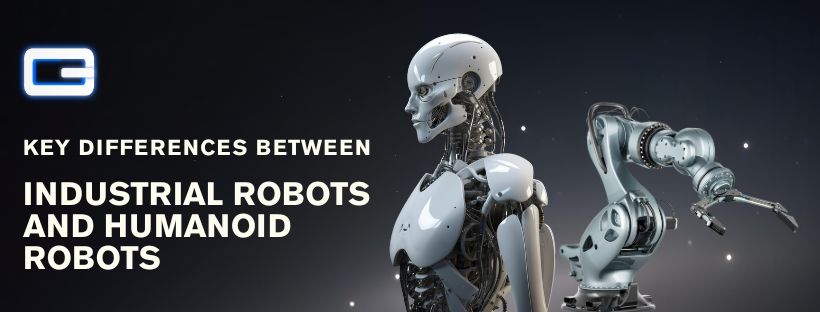
Industrial robots are built for one primary goal: efficiency. These machines are typically designed to perform repetitive tasks such as welding, assembling, or packaging with high precision. You’ll often see robotic arms in manufacturing units working tirelessly without breaks.
Humanoid robots, on the other hand, are designed to resemble human beings in structure and movement. Their purpose goes beyond repetition they are built to interact, adapt, and operate in environments made for humans. Because they mimic human form, they can use tools, navigate spaces, and perform tasks that require flexibility and mobility .
Flexibility vs Specialization
One of the biggest differences lies in flexibility. Industrial robots are highly specialized. They excel at doing one task extremely well but struggle outside their programmed function. This makes them ideal for controlled environments like factories.
Humanoid robots aim to be versatile. Powered by artificial intelligence, they can learn, adapt, and handle multiple tasks. For example, a humanoid robot can assist in customer service, healthcare, or even logistics roles that require decision-making and interaction. However, this flexibility also comes with complexity and higher costs .
Cost and Complexity
Industrial robots are generally more cost-effective and easier to deploy. Their simpler design and fixed functions make them reliable for mass production environments.
Humanoid robots are far more complex, often consisting of thousands of components and advanced sensors. This complexity increases both development and operational costs. While they offer greater potential, their widespread adoption is still evolving due to these challenges .
Real-World Applications
Industrial robots dominate manufacturing and logistics, where speed and precision are critical. In fact, many industries still rely heavily on these machines because they deliver consistent results at lower costs.
Humanoid robots are gradually entering real-world applications such as healthcare, retail, and smart automation. They are particularly useful in scenarios where human-like interaction or adaptability is required. As AI continues to advance, these robots are becoming more capable of handling complex, real-world tasks .
The Future of Smart Automation
The future doesn’t lie in choosing one over the other it lies in combining both. While industrial robots will continue to power large-scale production, humanoid robots will bring intelligence and adaptability to human-centric environments.
A great example of this evolution can be seen in the innovations highlighted by GB Corp’s AI humanoid robot initiative. Their approach focuses on integrating AI-driven intelligence with humanoid design to create smarter, more adaptive automation systems.
You can explore more about this advancement here: How the GBCORP AI Humanoid Robot Is Shaping the Future of Smart Automation
Final Thoughts
Industrial robots and humanoid robots serve different purposes, but together they represent the future of automation. As businesses move toward smarter, AI-driven systems, understanding these differences will help in making better technology decisions.