
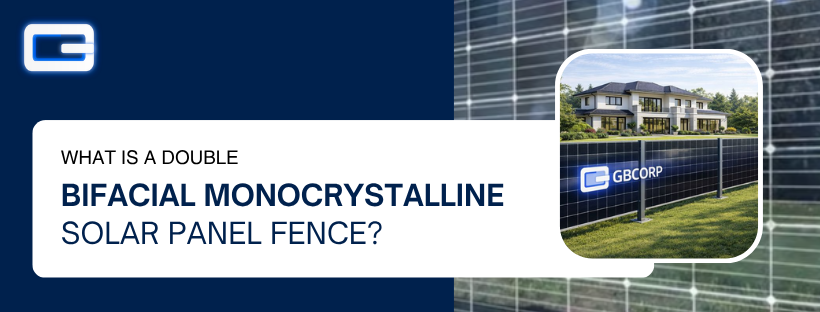
As the demand for clean energy grows, newer and more practical solar solutions are starting to appear in everyday spaces. One such innovation is the double bifacial monocrystalline solar panel fence. It may sound technical at first, but the idea behind it is actually quite simple. It combines a physical boundary with a working solar energy system.
Instead of installing solar panels only on rooftops, this system uses vertical panels that act like a fence or wall while generating electricity at the same time. Solutions like the one offered by GBCORP Double Bifacial Monocrystalline Solar Panel Fence show how solar technology is being adapted to fit modern infrastructure needs.
Understanding How It Works
A double bifacial solar panel is designed to absorb sunlight from both sides, front and back. This is different from traditional panels, which only collect sunlight from one side. Because of this dual-sided design, bifacial panels can capture reflected light from surfaces like the ground, walls, or surrounding areas, increasing overall energy generation.
When these panels are installed vertically, they are typically positioned to face east and west. This allows them to collect sunlight in the morning and evening, rather than relying only on midday sun. This setup works especially well in fence-style installations where space is limited, but consistent energy generation is still required.
What Makes It “Monocrystalline”?
The term “monocrystalline” refers to the type of solar cells used in the panel. These cells are made from a single crystal structure, which allows electricity to flow more efficiently compared to other types of panels. As a result, monocrystalline panels are known for higher efficiency and better performance over time.
When combined with bifacial technology, this creates a system that is both compact and capable of producing more energy from the same surface area.
A Fence That Generates Power
What makes this system stand out is its dual purpose. It doesn’t just generate electricity; it also acts as a physical structure. The double bifacial monocrystalline solar panel fence can be used as a boundary wall, partition, or even as part of a building design.
This type of setup falls under what’s known as Building-Integrated Photovoltaics (BIPV), where solar systems are built directly into structures instead of being added later. This approach helps save space and makes better use of available surfaces.
Why Businesses and Homes Are Considering It
One of the main advantages of this system is space efficiency. In places where rooftop space is limited, using vertical areas like fences or walls becomes a smart alternative. It allows property owners to generate renewable energy without needing additional land.
Another benefit is the consistent energy output. Because the panels capture sunlight at different times of the day, they can produce power more evenly rather than peaking only at midday. This can better match daily energy usage patterns.
There’s also a visual aspect to consider. Unlike traditional solar installations, these panels can be integrated into modern architecture, giving a cleaner and more organised look.
Final Thoughts
The double bifacial monocrystalline solar panel fence is a practical example of how solar technology is evolving. By combining structure and function, it offers a smarter way to generate energy without taking up extra space.As solutions like the GBCORP system continue to develop, it’s likely that we’ll see more buildings and properties adopting this kind of integrated approach, where sustainability becomes part of the design itself, not just an add-on.